Category Archives: Nutrition

All things related to how and what we eat.

Sample Recipes For Everyday

Speaking with club members or clients about getting their nutrition house in order, it usually comes down to what I do for some of my meals just so they can wrap their head around it. Here I want to present common recipes I use every day and you can adjust to your own tastes. My body type is a mesomorph, which I find the most common among us, so my ratio of carbs to protein and fat is 40:30:30. Ectomorphs (thin boned, runners, track and field types with high metabolisms) and endomorphs (thick boned, power lifters, slow metabolism and don’t process carbs well) have slightly different ratios to accomplish their goals.

For these recipes, added fat can be anywhere between 6 to 12 grams, but there is small amounts of fat in everything we eat, so when adding additional, I’d rather be conservative and aim lower. Two teaspoons of flax oil contains 9 grams and that’s fine.

Also, if you have the time to prepare whole foods for protein than powder, that would be the preferred way to go, as your body will use more energy to process it, and that will keep your metabolism running higher. For 30 grams of protein, that would be 4 ounces of poultry or meat, 5 eggs, or 1 cup cottage cheese.

Sample Breakfast

Protein Smoothie contains 1 cup water, 30 g protein (based on the info label, not weight), 2 tsp flax oil, 1 strawberry, 1/4 cup each of two frozen berries, and handful of spinach (should be over a cup). With that, I eat 1/3 cup cup raw large flake oatmeal cooked in 2/3 cup water, 1/4 cup cooked apple compote, and 1 rounded tbsp of milled flax. Protein 30g, Carbs 36g, Fat 9g

Protein and Fat (P+F) Smoothie (can be consumed anytime)

1 cup water, 30 grams protein (as above), 2 tsp flax oil, 1 banana, 2 strawberries, 1/4 cup each of two frozen berries and a handful of either spinach or kale. Whip up in a blender until smooth. Content should just fit into a large shaker bottle for later consumption. Protein 30g, Carbs 35g, Fat 9g

Protein and Carb (P+C) Smoothie, no addd fat (to be consumed only after working out)

1/2 cup apple cider, 1/2 cup water, 45 grams protein, 1/3 cup raw oatmeal, 1/2 banana, 2 strawberries, handful of either spinach or kale (though I would recommend the spinach over the kale simply because it all becomes so chunky). Whip up in a blender until smooth. Content should just fit into a large shaker bottle for after your workout. Protein 45g, Carbs 53g, Fat 0g

Pre Bed Snack (P+F)

1/4 cup each of two frozen berries (defrost in the microwave for a minute), 1 rounded tbsp milled flax and 1/2 cup 1% cottage cheese and a little cinnamon sprinkled on top. Mix it up.
Controlling Your Blood Sugar

Whether your goal is to lose weight or increase your lean body mass, you’ll be doing yourself a big favour by watching your blood sugar, or at least the foods that can cause it to spike in the first place. You can do this by not consuming foods that counter your weight composition goals most of the time, the exception being after exercise when the hormone Insulin is suppressed for about 3 hours. When your blood sugar spikes, and there is no immediate use for it, as in a high level activity, your body is going to store it as body fat. This works both ways: if you want to be leaner, by eating low glycemic foods, it will help you make healthy food choices and get you to your goal sooner. And if your goal is to increase your muscle mass, some fat gain is expected as you increase your Caloric intake. You can control that by eating clean and eating medium and high glycemic foods only within 3 hours after working out, but the intensity of your workout is key here as well.

Decades ago the big thing was the glycemic index which put a value on specific foods and their ability to affect your blood sugar. From that a lot of foods were deemed inappropriate to healthy eating, but it was slightly off the mark such as considering carrots as a food we should avoid, if you ate a bushel of them. Someone got wise to this and retooled the index to normal serving sizes and referred it as the glycemic load chart and that’s what I want you to follow. Consume any food considered low glycemic and avoid foods that are high glycemic. Medium glycemic foods should be consumed sparingly.

I’ve attached a PDF of a detailed glycemic index/load chart I found on line a while ago. Unfortunately, I don’t know who the creator was and it has since been removed from the web, so you have access to my scanned copy. I’ll post the link to the original if it ever becomes available. Glycemic Load Chart_0001

Interesting Stuff About The Nutrition Facts Label

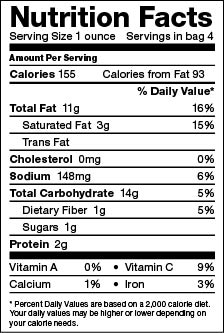
Nutrition-LabelWhile I can’t disagree about the importance of nutrition labels (those standard information labels on the side of almost every packaged food we buy), you need to understand they are not as accurate as you would assume they would be. That’s because there are tens of thousands of food products out there and it would be nearly impossible for every one of them to be analysed when, in the eyes of so many manufacturers who want to keep costs down, there are similar products already out there they can use as a standard. When a product is analysed for its nutritional content, it’s placed in a Food Bomb at a lab where it is reduced to ash. The content of the carbon in the ash is then broken down into the macro and micro-nutrients available. From the number of grams of protein, carbohydrates and fat, they can calculate the total calories.

The problem with nutrition labels also lies with the product itself because there are so many variables from when it’s grown or raised to when it reaches your table. You can’t expect that every similar product was produced the same way, or a product produced in February will be the same as one packaged in August.

When you’re counting calories, use the labels as guidelines and not hard facts. You do want to focus on as high a fibre content as possible, but low numbers on sugar and sodium content. And with the exception of some nut based products (natural almond and peanut butters which are fat sources), you don’t want products where the fat content is nearly as high (or higher) as the protein content.

Keeping an Eye on Omega-6 Intake

Your body needs to consume fats to function and should be consumed with every meal, ideally equal portions of each type. They are monounsaturated, polyunsaturated and saturated. What I want to focus on is Omega-3 and Omega-6 fatty acids which make up polyunsaturated fats. In your body, Omega-6 fatty acids are inflammatory which has a negative effect on your body’s systems. Consistently high levels can be a cause for chronic disease and inflammation of the joints. Omega-3 fatty acids, on the other hand, neutralize the effects of Omega-6 damage and work best when consumed at a ratio of 1:1. Realistically, we should strive for a ratio of 4:1. Unfortunately, the current North American diet has a diet closer to 20:1 due to the high levels of corn by-products used in their popular processed foods. Nuts are considered a popular snack option and a great source of monounsaturated  fatty acids and Omega-3, but they’re even higher in Omega-6s. Your true defender of Omega-6 overload is flax oil or milled flax seeds, or fresh fish or fish oils that are high in Omega-3 such as salmon.

For a great chart comparing ratios of Omega-3 to Omega-6, check out this link: http://fanaticcook.blogspot.ca/2009/04/omega-6-and-omega-3-in-foods.html