
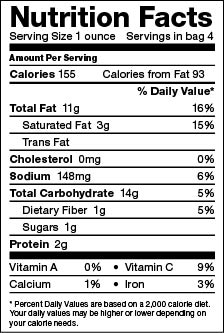
 While I can’t disagree about the importance of nutrition labels (those standard information labels on the side of almost every packaged food we buy), you need to understand they are not as accurate as you would assume they would be. That’s because there are tens of thousands of food products out there and it would be nearly impossible for every one of them to be analysed when, in the eyes of so many manufacturers who want to keep costs down, there are similar products already out there they can use as a standard. When a product is analysed for its nutritional content, it’s placed in a Food Bomb at a lab where it is reduced to ash. The content of the carbon in the ash is then broken down into the macro and micro-nutrients available. From the number of grams of protein, carbohydrates and fat, they can calculate the total calories.
The problem with nutrition labels also lies with the product itself because there are so many variables from when it’s grown or raised to when it reaches your table. You can’t expect that every similar product was produced the same way, or a product produced in February will be the same as one packaged in August.
When you’re counting calories, use the labels as guidelines and not hard facts. You do want to focus on as high a fibre content as possible, but low numbers on sugar and sodium content. And with the exception of some nut based products (natural almond and peanut butters which are fat sources), you don’t want products where the fat content is nearly as high (or higher) as the protein content.
 You Can't Out-Train A Bad Diet